
Radioactivity can be both natural and artificial. While radioactivity plays an important role in science, medicine and energy production, it is important to be aware of the potential risks it can pose to human health and the environment.
What is radioactivity?
Radioactivity is the ability of a substance to emit radioactive radiation when its nuclei decay naturally. This means that radioactive matter changes over time, releasing alpha, beta or gamma radiation in the process. In most cases, substances have both stable and radioactive isotopes. 118 different chemical elements have been discovered and each element exists in several forms, or isotopes. In total, more than 3,000 isotopes are known and most of them are radioactive.
Radioactivity discoverer, Henri Becquerel, noticed in 1896 that uranium salt emits invisible radiation. This discovery paved the way for the study and practical use of radioactive elements. It was later complemented Marie Curie together with her husband Pierre, discovering new radioactive elements and making a major contribution to radioactivity research.
Types of radioactivity
Radioactive radiations is divided into direct ionising and indirect ionising radiation. Directly ionising radiation includes alpha, beta and gamma radiation. Indirectly ionising radiation is neutron radiation, the ionising effect of which is due to its ability to excite nuclei and cause them to decay.
Sources of radioactive radiation
The vast majority from radioactive radiation or radiations from natural sources. The largest source of radioactive radiation is radon, which contributes about half of the total dose. Natural background radiation is also a significant contributor.
Artificial sources of radioactivity include medical exposure, such as X-rays and other medical procedures. Other sources of artificial radiation include nuclear disasters, consumer products and radioactive releases from nuclear testing, nuclear power engineering, military installations, industry and medical and research institutions.
Some people also receive additional doses of radioactivity through their work (including as a radiological technician), especially in aviation and mining, where exposure to cosmic radiation or radon is higher than normal.
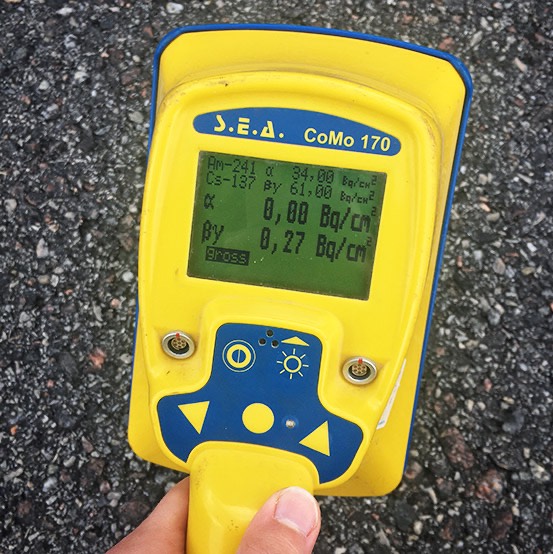
How is radioactivity measured?
Radioactivity cannot be perceived and can only be measured with a special instrument. Radioactivity is measured at many points throughout Estonia by the Environment Board. In addition, it is possible to involve specialists to measure radioactivity. AS ALARA is also involved in the measurement of ionising radiation and radioactive contamination.
Units related to radioactivity
Radioactivity-related units help to measure and describe the intensity, quantity and effects of radioactivity.
Each radioactive element has its own decay rate, measured in units of radioactive activity, bekrell (Bq).
The units used to measure the dose of ionising radiation are as follows grei (Gy).
The effects of radiation on the organism are expressed as siivertites (Sv), which takes into account the type and hazard of the radiation.
Effects of radioactivity
Radioactivity has an impact on human health. The effects of radioactive radiation depend primarily on the dose and its duration.
In the case of a single high radiation dose health effects: reddening of the skin, nausea and vomiting within a few days. However, higher doses of radiation can also have more serious consequences, in the worst cases fatal.
How to protect yourself from radioactive poisoning?
It is important to be aware of how early detection of radioactivity is possible and how to protect yourself from radioactive poisoning.
Under the leadership of the Environment Agency radiation monitoring, which allows for rapid action in the event of an emergency and to inform the public about the spread of radioactive contamination.
In Estonia, two types of measuring instruments are used to detect radioactive threats:
- automatic radiation monitoring stations, of which there are 15 across Estonia;
- filter stations, of which there are 3 across Estonia.
When notified a radiation accident, you must follow the recommendations of the Rescue Board.:
- Shelter indoors quickly and follow official instructions. If you are in a contaminated area, remove contaminated clothing, place it in a plastic bag and move it outdoors. Stay in the shade until you are notified that the risk has passed.
- Stay indoors and make sure the outside air cannot get in, and close doors, windows, vents and flues.
- Protect your respiratory tract and skin if you are in radioactively contaminated areas. To do this, put a wet cloth over your mouth and nose and, if possible, cover your body with protective clothing.
- Do not eat, drink or smoke in a contaminated area.
It is also important to know what the radioactivity symbol is to indicate higher levels of radioactivity to avoid dangerous exposure. If you notice an item with a radioactivity mark, you should report it and take action. the corresponding instructions by.